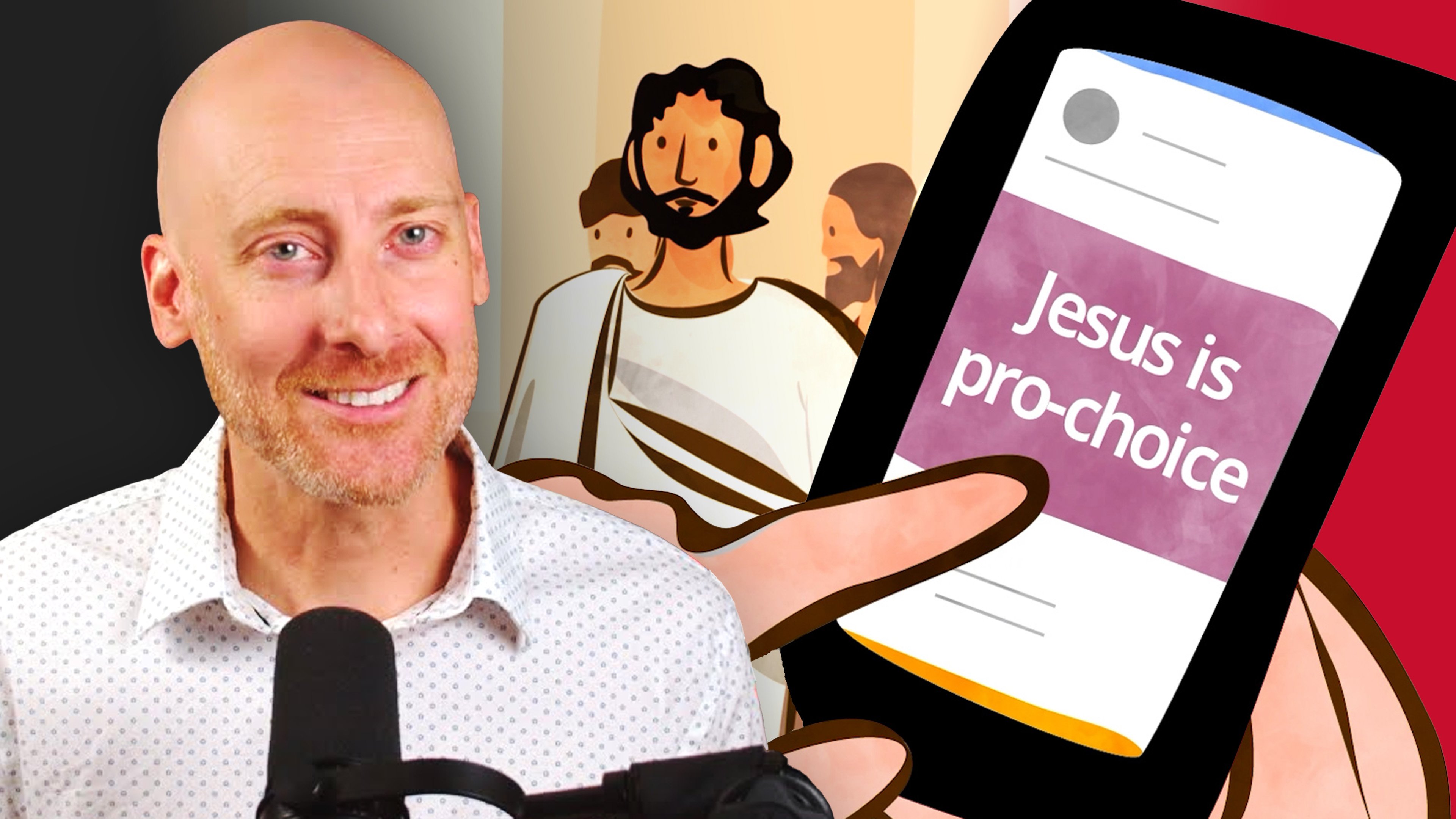
You’re in a conversation and someone challenges a tenet of Christian belief and uses the Bible to do it.
What would you say?
Hi. I’m Tim Barnett. When discussing a challenging topic, it’s helpful to pause and THINK through these five steps:
T. Test the Claim
H. Hold it up to Scripture
I. Identify assumption
N. Name the fallacies
K. Know what you’re talking about.
In this episode we’ll cover H: Hold it up to Scripture.
Critics and cynics love to cite the Bible whenever it seems to support an agenda. They’ll say things like, “Jesus said not to judge.” “Scripture says God’s pronouns are they/them.” “The Bible condones polygamy.”
What makes these challenges tricky is that they sound biblical. They feel authoritative. And because it’s wrapped in a Bible verse, many Christians don’t know how to respond.
The next time someone uses Scripture to challenge what you believe, here are three things to remember.
First, hold it up to Scripture.
The Bible isn’t just another opinion; it’s God’s Word. And if God is truth, then what He says truly describes reality. Scripture is an authoritative collection of books given by God to men through men.
That’s why Jesus responded with “It is written…” when He was tempted in the wilderness. That’s why Jesus confronted errors with “Have you not read…?” That’s why Jesus said, “Scripture cannot be broken.” If Jesus used Scripture as His authority, so should we.
We see this mindset in the Bereans. When Paul taught them, they didn’t just accept it blindly. Instead, “They examined the Scriptures daily to see if these things were so”.
That’s critical thinking—an open mind combined with an open Bible.
Whenever we are confronted by a challenge, we should ask, what (if anything) does the Bible have to say about this?
We should constantly conform our minds to truth, including the truth of God’s Word.
So, before you accept an idea, pause and hold it up to Scripture. This leads to the next point.
Second, never read a Bible verse.
We don’t just want to know what the Bible says. We want to know what it means. And that requires doing our best to understand the author’s original intent.
Sadly, there are many who want to make the Bible mean whatever they want. For example, there is a true story of a woman who was looking for a reason to leave her husband for another man. When she opened her Bible to Ephesians 4:24 and read, “Put on the new man,” she took that as clear confirmation that she should leave her husband.
Of course, that’s not what Paul meant.
Here’s one principle that has helped my understanding of the Bible more than anything else: Never read a Bible verse.
What I mean is, don’t ever read a verse. Read the verses around the verse. Read the paragraph. Read the chapter. Better yet, read the entire book or letter. In other words, read the context.
Take the common claim: “Jesus said not to judge.” Notice the phrase “Judge not!” is plucked out of context. When you read the context of Matthew 7, Jesus says we must first remove the log from our own eye so that we can help remove the speck from someone else’s.
So, Jesus isn’t telling us never to judge. He’s telling us how to judge. He saying don’t judge hypocritically. That entire challenge collapses simply by reading the context.
Here’s why these matters. If you’re reading God’s word out of context, then you’re not reading God’s word. You're missing the intent of the passage.
Third, don’t confuse description with prescription.
Another common way people can miss the intent of a Bible passage is by confusing what Scripture describes with what it prescribes. If something is descriptive, the Bible is telling what happened. It’s simply reporting, without weighing in on whether it’s good or bad. If something is prescriptive, the Bible is telling what ought to happen. It’s giving a command, or moral guidance.
The Bible describes many terrible things simply because it’s recording history. It describes wars, violence, assault, murder, adultery, and idolatry.
But here’s the key point: just because the Bible records something doesn’t mean it approves of it.
For example, some people will say, “The Bible condones polygamy.” It’s true the Bible records many polygamous relationships. But it never endorses polygamy as morally good. In fact, those accounts almost always highlight the pain, conflict, and dysfunction that result.
So here’s the simple question to ask whenever someone makes a biblical claim: Is this passage describing something, or prescribing something?
That one question will clear up a lot of confusion.
So, the next time someone uses the Bible to challenge what you believe, remember:
1. Hold it up to Scripture
2. Never read a Bible verse
3. Don’t confuse description with prescription.



 Colson Center
 Colson Center : Jun 29, 2026, 2:33:52 PM